What Is Better for a Complete Beginner in Crypto
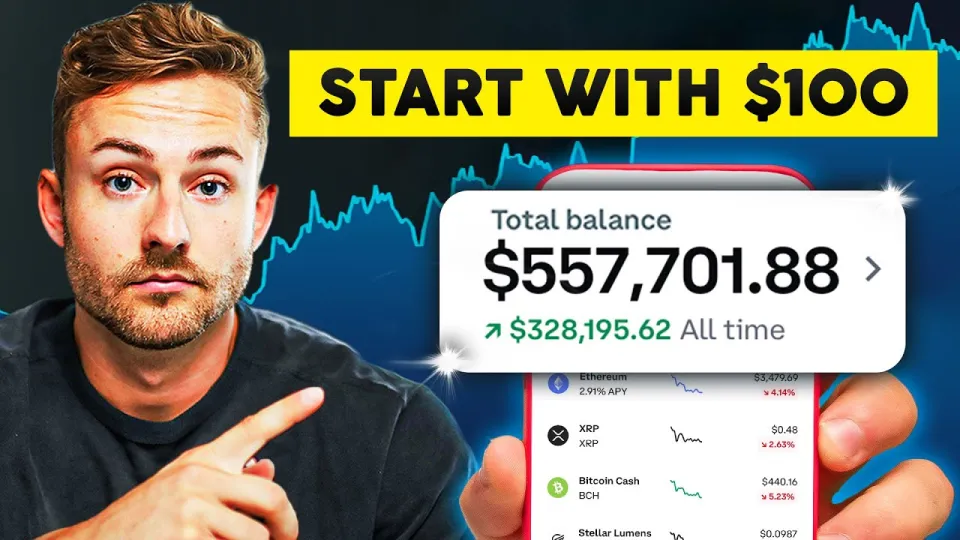
Video: How To Invest in Crypto as A COMPLETE Beginner [2025 GUIDE]
You can order the same kind of articles for your own video to boost it on YouTube and Google. Just message the Telegram bot @sat_sit_bot. It writes articles around your video, embeds the video and publishes them on popular niche websites (no ads). Try it free: 50 articles on us.
For a complete beginner, buying a small amount of Bitcoin or Ethereum on a regulated exchange and holding it long term is the better starting point than active trading, because it removes leverage, timing pressure and the need for a tested system. Trading can come later, once you understand the market and have a written process. Craig Percoco's beginner breakdown covers exactly this path, and you can start with his free trading learning resources at the free trading course.
Why crypto is still an emerging market worth understanding
Crypto is a young asset class, and that youth is the whole opportunity: adoption is incomplete, liquidity is uneven, and prices swing far more than in equities. Percoco, who has spent seven years trading and investing, frames the current cycle as a chance to build generational wealth rather than a get-rich-quick scheme. The catch is that the same volatility that creates upside also wipes out unprepared participants.
A beginner should treat crypto as one allocation inside a broader portfolio, not as a replacement for savings. Decide in advance what percentage of your net worth you can lose entirely without changing your life, and never fund a crypto account with borrowed money or rent money. That single rule prevents most of the disasters that show up in beginner stories.
Crypto basics: what you are actually buying
A cryptocurrency is a digital asset recorded on a blockchain, a public ledger maintained by many computers instead of one company. Bitcoin is the original, designed as scarce digital money with a fixed supply cap; Ethereum is a programmable network where applications and tokens run on smart contracts. Everything else, from large-cap altcoins to meme tokens, sits somewhere on a spectrum from infrastructure to pure speculation.
Three practical concepts cover most of what a newcomer needs:
- Market capitalisation tells you how large a coin is relative to others and how much money it takes to move the price.
- Tokenomics describes supply, emission schedule and how much insiders hold; a huge unlock calendar can crush a price even when the project is real.
- Liquidity determines how easily you can exit; thin order books mean heavy slippage on the way out.
Understanding these three before buying anything is the difference between investing and gambling on a ticker.
Fundamentals versus technicals: how to analyse a coin
Fundamentals answer whether an asset deserves your money; technicals answer when and at what price to act. On the fundamental side, look at the team and its track record, the actual usage of the network, developer activity, revenue or fee generation, competitive positioning and token distribution. A project with real users and a credible roadmap behaves very differently in a drawdown than a coin that only has a marketing budget.
On the technical side, beginners only need a handful of tools: support and resistance levels, trend structure, volume, and a couple of indicators such as moving averages or relative strength. Charts are a map of where buyers and sellers previously agreed on price, not a prediction machine. Percoco's guide separates these two layers deliberately, because mixing them is how people end up buying a weak project simply because the chart looked strong for a week.
How to actually make money and avoid the classic beginner mistakes
Making money in crypto comes down to two levers: position sizing and patience. A long-term holder profits from time in the market and disciplined accumulation; a trader profits from a repeatable edge executed many times with controlled losses. Both require the same foundation, and the recurring failure list among beginners is remarkably consistent: no system, no patience, no discipline, no backtesting, no journal, poor psychology and poor risk management.
A workable routine looks like this:
- Write your thesis for every position before entering, including invalidation.
- Risk a fixed small percentage of the account per trade, typically 1–2%, never an amount that changes your life.
- Backtest the idea on historical data so you know what a normal losing streak feels like.
- Journal every trade with entry, exit, reason and emotion.
- Review the journal weekly and cut what does not work.
Skipping steps three and four is why so many people describe years of losses despite consuming endless content. Information is not the bottleneck; process is.
How to buy and sell crypto safely
Buying crypto is the easy part, provided you choose the right venue. Use a reputable regulated exchange with proof of reserves, enable two-factor authentication, whitelist withdrawal addresses, and start with a small test transaction before moving meaningful amounts. Buying Bitcoin or Ethereum with a bank transfer is usually cheaper than card purchases, which carry fees of several percent on many platforms.
For storage, decide between keeping assets on the exchange for convenience or moving them to a hardware wallet for self-custody. Self-custody removes counterparty risk but puts the entire burden of seed-phrase security on you. Selling works the same way in reverse: use limit orders where possible, avoid panic-selling into thin liquidity, and remember that in most jurisdictions every sale is a taxable event, so keep clean records from day one.
Typical beginner doubts and what they really mean
Scepticism about crypto is healthy, and the most common doubts are easy to address. People worry the market is a scam: much of it is, which is why sticking to large, liquid assets and regulated venues filters most of the danger. People worry they are too late: the asset class is volatile and cycles repeat, but nobody can promise returns, so size positions accordingly.
Another frequent theme is losing money while trading alone without guidance. That is a real risk, and the honest answer is that no mentor replaces risk management; a structured course or community can shorten the learning curve, but the discipline is yours. Finally, many beginners chase small wins with tiny capital and find the results meaningless, then over-leverage to compensate. The fix is the opposite: fewer, better-planned positions with clear risk limits.
All the resources from the breakdown
- Free trading learning resources: https://bit.ly/3VHSOeT
- Crypto trading course and private team: https://bit.ly/3xhn47c
- Discord community access: https://bit.ly/3VmrO3r
- Full resource list: https://bit.ly/3zeM13u
- TradingView charting: https://bit.ly/3Xf9uvz
Final takeaway for a complete beginner
Start slow, buy established assets on a regulated exchange, and treat the first year as education rather than a payday. Learn the basics, separate fundamentals from technicals, and only add trading once you have a written system, backtested results and a journal you actually review. Craig Percoco's video breakdown is a solid structured starting point for that journey, and his free trading course is the natural first step before risking real capital.
Key takeaways
- Craig Percoco has spent 7 years trading and investing and frames crypto as an emerging market where beginners can still build generational wealth.
- The breakdown splits learning into crypto basics, fundamentals, technicals, and the practical mechanics of buying and selling.
- Most beginner losses come from missing systems, patience, discipline, backtesting, journaling, psychology, and risk management.
- Buying through a regulated exchange and holding long term is the lower-risk path; trading requires a tested process and strict position sizing.
- Risk capital only: leveraged crypto trading can lose more than the initial deposit.
Questions & answers
How much money do I need to start investing in crypto?
You can start with a very small amount, but the size matters less than the source of the money. Use only risk capital you could lose entirely, keep crypto a small slice of your portfolio, and avoid leverage until you have a tested process and a journal of results.
Is it better to buy Bitcoin or smaller altcoins as a beginner?
Large, liquid assets such as Bitcoin and Ethereum are the safer starting point because they have deep markets, long track records and lower risk of collapse. Altcoins can outperform in bull phases but carry far higher risk of permanent loss, so many beginners keep altcoin exposure small or skip it entirely at first.
Do I need a mentor or a paid course to trade crypto?
A structured course or community can shorten the learning curve by giving you a framework and feedback, but it cannot replace your own risk management. Whatever you pay for, insist on backtested methods, clear risk rules and no promises of guaranteed returns.
Why do so many beginners lose money in crypto?
The usual causes are the same every cycle: no system, no patience, no discipline, no backtesting, no journal, weak psychology and poor risk management. Most losses come from oversized positions and emotional decisions rather than from bad information, which is why process beats knowledge.
Source: How To Invest in Crypto as A COMPLETE Beginner [2025 GUIDE] · Markdown version